How to Start a Cars and Coffee
This article is general information, not legal, tax or insurance advice. Confirm specifics with a CPA, attorney or licensed agent in your state.
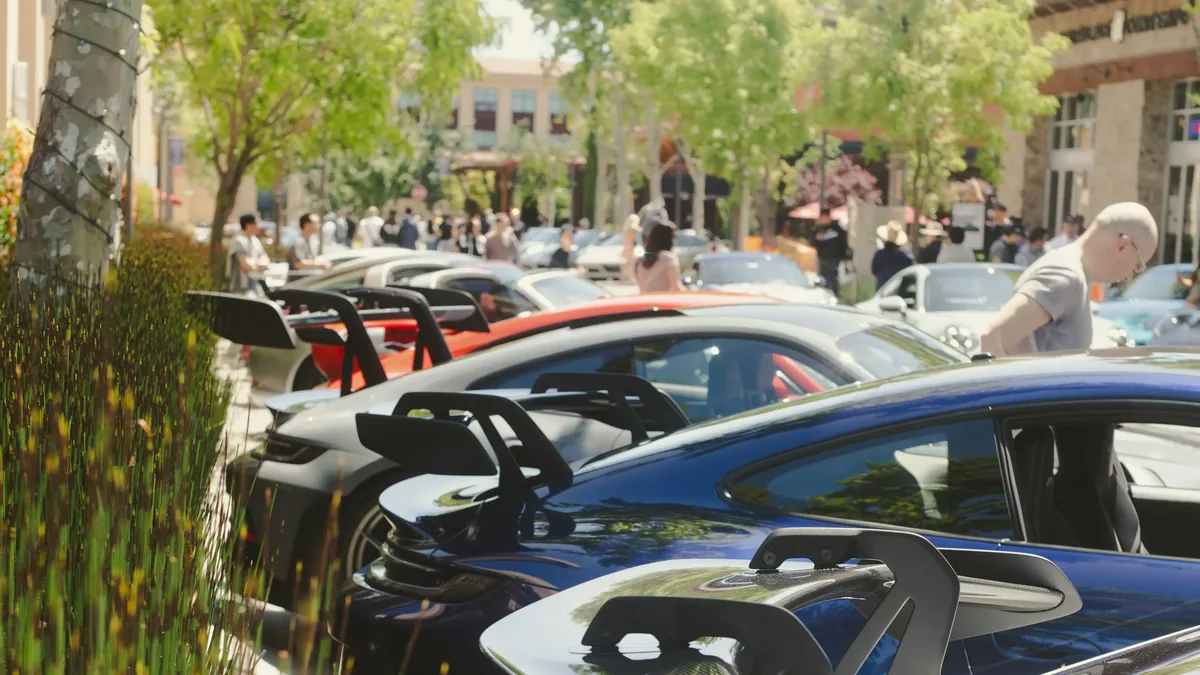
A cars and coffee is a recurring, low-key gathering — usually a weekend morning in a parking lot — where people show up with whatever they drive, park, and talk cars for a couple of hours. It's different from a car show: there's no registration, no judging, no trophies, and often no formal organizer at all in the early stages. Starting one takes a venue with permission, a simple set of rules, a consistent schedule, and a way to spread the word. This guide covers each of those steps, plus when it makes sense to formalize a growing meet into something more structured.
In this guide
- Cars and coffee vs. car show: what's actually different
- Picking a venue and getting permission
- Insurance and liability basics
- Setting the rules
- Promoting your first few meets
- Choosing a recurring cadence
- Growing it without losing the vibe
- When to formalize into a club
- Frequently asked questions
Cars and coffee vs. car show: what's actually different
The two look similar from a distance — a lot full of interesting cars — but the format is different in almost every way that matters to an organizer:
| Cars and coffee | Car show | |
|---|---|---|
| Registration | None or a simple RSVP | Usually required, often paid |
| Judging/awards | None | Often has classes and trophies |
| Duration | 2–3 hours, one morning | Can run a full day |
| Formality | Casual, drop-in | Structured schedule |
| Organizer effort | Low once established | High — vendors, judges, logistics |
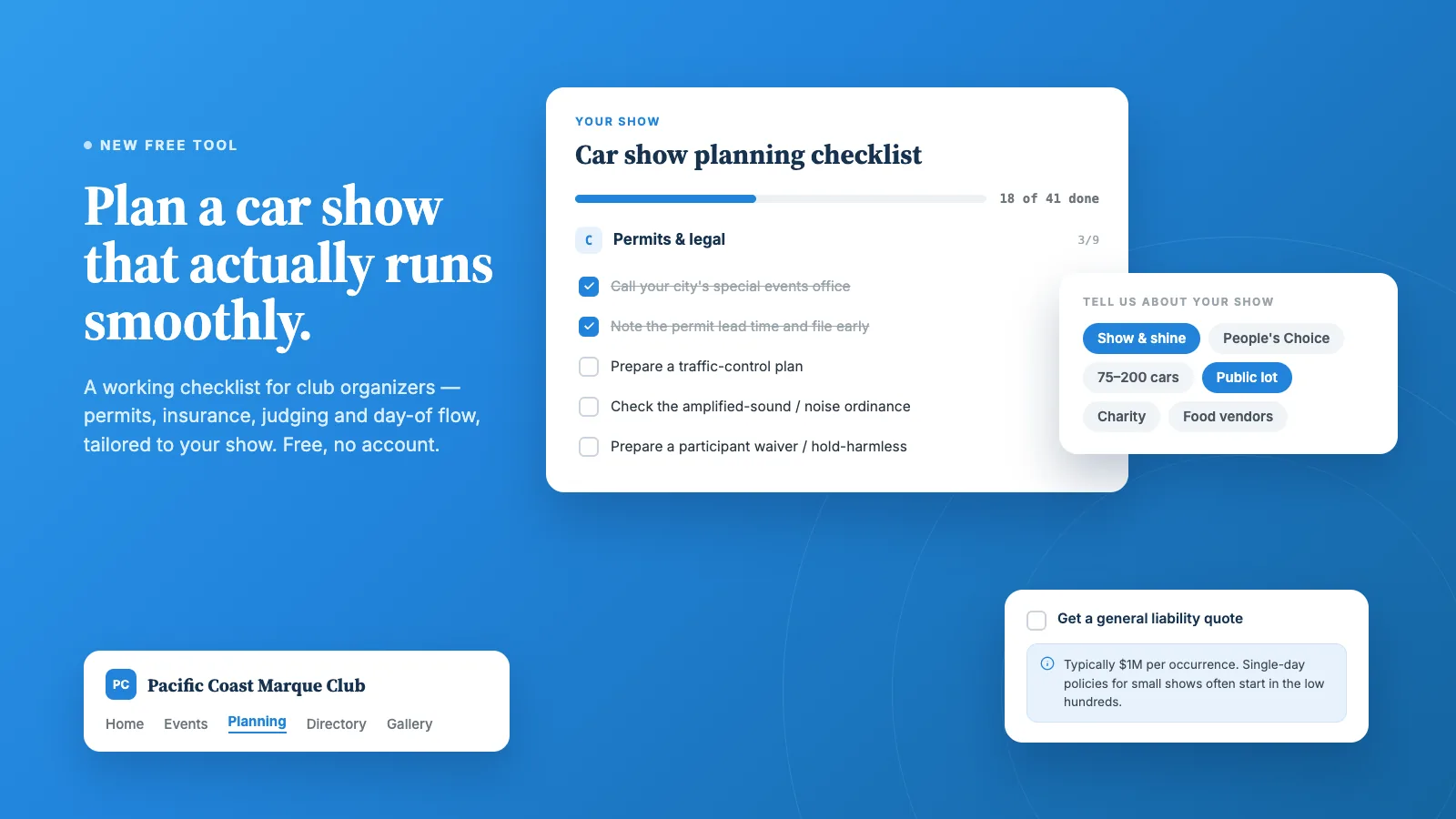
Because there's no registration or judging to manage, a cars and coffee is a much lower lift to start than a full show — which is exactly why it's often the first event a future car club or show organizer ever runs. If you eventually want to run something bigger, our guide to how to plan a car show and our car show planning checklist cover that next step.
Picking a venue and getting permission
The venue is the single most important decision you'll make, because losing it is the single most common way a promising cars and coffee dies. A good venue has:
- Ample parking that isn't needed by the business itself during your hours (a Sunday-morning-only lot, an office park empty on weekends)
- Easy in/out access so cars aren't backing across a busy road or blocking a shared driveway
- A business or property owner who benefits from the foot traffic — a coffee shop, diner, or shopping center is a natural fit, since attendees buy coffee and food while they're there
Always get permission from the actual property owner or manager in writing or email, even if it's informal — a text confirming "yes, you're good to use the lot Saturday mornings" is enough for a small meet, and it's the first thing you'll need if a municipality or the property's insurer ever asks questions later. Small meets on private property with clear owner permission generally don't need a city permit; that changes once you're drawing large crowds or using public streets or land, at which point check with your city or county about event permit requirements before you grow past a casual size.
Insurance and liability basics
This is general guidance, not a substitute for talking to a licensed insurance agent about your specific event — but here's what typically comes up:
- Many venues will ask for a certificate of insurance (COI) naming the property owner as an additional insured before they'll formally sign off, especially once a meet grows beyond a very casual, small gathering
- Standalone event liability policies exist specifically for this and are sold by the day or the year through several insurance marketplaces; costs vary by expected attendance, but single-day event policies for casual meets are generally inexpensive relative to the risk they cover, while an annual policy makes more sense once you're running the same event monthly
- A simple waiver or posted rules sign (no burnouts, park at your own risk, club/organizer not responsible for damage) won't replace insurance, but it does set clear expectations for attendees and can help demonstrate you took reasonable precautions
Start small and casual on private property with clear owner permission, and treat formal insurance as something you add once the meet is regular enough, and drawing enough people, that the venue or a permit requires it.
Setting the rules
Every long-running cars and coffee has some version of the same short rule list, because the same handful of behaviors are what get meets shut down. Post these visibly — a sign at the entrance, a pinned social post, a line in your event description:
- No burnouts, donuts, or drifting — this is the single most common reason a venue pulls permission; one bad video is enough to end a meet that took months to build a reputation
- No excessive revving or aggressive exits — a car being heard briefly is part of the culture; holding high RPM for a video is not
- Arrive and park calmly — no racing into the lot, no blocking other cars in
- Leave the way you came in — a rowdy exit is just as damaging to the venue relationship as a rowdy arrival, and it's usually what neighbors and passersby actually see
- Respect the property — no trash left behind, no blocking neighboring businesses' spots or access
- Depart by the agreed end time — venues are far more likely to keep hosting a meet that clears out on schedule every single week
The underlying principle worth stating to attendees directly: the meet exists because the community has earned a property owner's trust, and one person's bad decision can end it for everyone.
Promoting your first few meets
For the first meet or two, direct outreach beats broad announcements — a strong small turnout is a better foundation than a chaotic large one you can't manage yet.
- Start with your own network — local car club members, friends, coworkers with interesting cars
- Post in local car groups on Facebook and Instagram, and in any regional forums or Discord servers for your area's car scene
- Use a simple, consistent event name and time so people can find and remember it — "Third Saturday Cars & Coffee at [Location]" works better than a name that changes each month
- Ask the venue to promote it too — a sign in the window or a mention on their own social accounts brings in customers who wouldn't have found you otherwise
- Create a single event page or RSVP link you reuse every time, rather than a new post from scratch each month, so regulars always know where to check for updates or cancellations
If you're building this alongside — or as the seed of — a broader event calendar, our resources for event organizers covers promotion and logistics in more depth.
Choosing a recurring cadence
Weekly, biweekly, and monthly all work — the right choice depends on your climate, your organizing bandwidth, and how much the local scene can sustain:
- Weekly works in car-heavy metro areas with a large enough pool of regulars and good year-round weather; it also builds habit fastest
- Monthly is the most common choice and the easiest to sustain long-term with a volunteer organizer, especially somewhere with a real winter
- Biweekly splits the difference and suits mid-sized scenes
Pick a fixed pattern — "first Saturday" or "every other Sunday" — rather than picking a new date each time. A predictable schedule is what turns a one-off meet into a habit people build their weekend around.
Growing it without losing the vibe
Growth is good until it isn't. A cars and coffee that outgrows its venue's capacity creates the exact problems — parking overflow, traffic, complaints — that get meets shut down. A few ways to manage growth deliberately:
- Watch capacity, not just turnout. If you're regularly overflowing the lot onto the street, it's time to either find a bigger venue or accept the current size as the ceiling.
- Recruit a co-organizer or two once attendance passes what one person can manage solo — someone to help with parking direction, sign-holding, or just being a second point of contact with the venue.
- Keep the rules enforcement consistent as it scales. A meet of 30 regulars self-polices through peer pressure; a meet of 300 strangers needs someone actively managing the entrance and exit.
- Consider a second, smaller weekly meet instead of growing one meet indefinitely, if demand outpaces what a single venue can hold.
When to formalize into a club
Plenty of cars and coffees stay informal forever, and that's fine — not every meet needs to become an organization. But a few signals suggest it's worth formalizing into a club with actual membership, dues, and structure:
- You're organizing multiple events beyond the weekly meet (drives, a bigger annual show, charity events) and need a way to coordinate and fund them
- Regulars are asking how to "officially" join or get involved beyond just showing up
- You need liability insurance or a bank account, which is much easier to get under a formal club than as an individual
- You want a way to communicate with regulars beyond social media, which platforms can bury or deprioritize in feeds
If any of that sounds familiar, our guide to how to start a car club walks through the next step — and once you're organized, you can list your club in RumbleSeat's club directory so enthusiasts searching for a cars and coffee near them can actually find yours. If your meet is growing toward something bigger, like an annual show alongside the weekly gathering, our car show planning guide covers the planning sequence for that leap.
RumbleSeat is a free platform for running the club side once you formalize — event RSVPs, a member directory, and dues collection, with no setup fee, no monthly fee, and no per-member charge.
See what's includedFrequently asked questions
How do I start a cars and coffee event?
Find a venue with parking and get the owner's permission, set a simple recurring day and time, post a short list of rules (no burnouts, no excessive revving), and promote it through local car groups and your own network for the first few meets.
What's the difference between a cars and coffee and a car show?
A cars and coffee is casual and recurring with no registration or judging, usually lasting a couple of hours on a weekend morning. A car show is typically a structured, one-time or annual event with registration, classes, and awards.
Do I need insurance to host a cars and coffee?
Small, casual meets on private property with clear owner permission often don't require formal insurance to start. As attendance grows, many venues will ask for a certificate of insurance naming them as additional insured — talk to a licensed agent about a standalone event policy at that point.
What rules should a cars and coffee have?
At minimum: no burnouts, donuts, or drifting; no excessive revving; calm arrivals and departures; respect for the property; and a firm end time. Post the rules visibly so attendees know what's expected before they show up.
How often should a cars and coffee meet?
Monthly is the most common and sustainable cadence for a volunteer-run meet. Weekly works well in larger car scenes with good year-round weather and enough regulars to sustain it.
When should a cars and coffee become a car club?
Consider formalizing once you're coordinating multiple events, regulars are asking to officially join, or you need insurance or a bank account — all of which are easier to get under a structured club than as an individual organizer.
Sources:
Powered by RumbleSeat — the all-in-one platform for car clubs, digital garages, and the automotive marketplace.
Start your club free